
Gums
Bleeding gums when you brush: what it means and what to do
Pink in the sink is common and usually starts with plaque at the gumline. Here is how to read the pattern, a daily routine to try, and the signs that mean a dentist should look now.

On this page (8 sections)
Bleeding gums are most often a sign of plaque building up at the gumline, which can lead to gingivitis, the early stage of gum disease, according to MedlinePlus. The usual fix is gentle, thorough cleaning every day plus a professional cleaning: MedlinePlus says bleeding and tenderness should lessen within 1 or 2 weeks after a professional cleaning combined with good care at home.
If you spit pink every time you brush or floss and lie awake wondering whether your gums are receding, you are not alone, and the early stage is the most fixable one. The CDC describes gingivitis as reversible, while the later stage, periodontitis, cannot be reversed but can be slowed and managed. That is why bleeding is worth acting on now, calmly. This guide explains how to tell short-lived irritation from gingivitis, gives you a two-week routine to try, and lists the signs that mean you should not wait. Everyone's mouth is different, so treat the timings as typical ranges, not promises.
Key takeaways
- The main cause of bleeding gums is plaque at the gumline (MedlinePlus). Removing it gently every day is the core of the fix.
- Brush twice a day for about two minutes with a soft brush and fluoride toothpaste, and clean between your teeth once a day (ADA, NHS).
- Do not stop cleaning the spots that bleed. Bleeding there is usually inflammation from plaque that is still there.
- Tartar cannot be brushed off; it needs a professional cleaning (CDC).
- Book a cleaning: MedlinePlus says bleeding should lessen within 1 or 2 weeks after a professional cleaning with good home care. Pain, swelling or a loose tooth need a dentist sooner.
- If you take a blood thinner, keep taking it as prescribed and tell your dentist and prescriber about the bleeding.
Do this today
- Check your toothbrush. If the bristles are frayed or it is older than about three months, replace it with a soft-bristled one.
- Tonight, brush for a full two minutes at the gumline, then spit out the toothpaste without rinsing with water.
- Clean between every tooth once, gently, with floss or an interdental brush, and note which spots bleed.
Why bleeding gums happen: irritation or gingivitis?
Plaque is a sticky film of bacteria that forms on teeth every day. When it sits along the gumline, the gums become inflamed: red, swollen and quick to bleed. MedlinePlus lists bleeding when brushing or flossing, bright red or reddish-purple gums, tenderness, swelling and bad breath among the signs of gingivitis. If plaque is not removed it hardens into tartar, which the CDC says cannot be removed with toothbrushing.
Not all bleeding is gingivitis. MedlinePlus also lists brushing too hard, improper flossing, hormonal changes during pregnancy, ill-fitting dentures, infection, the use of blood thinners, bleeding disorders, and vitamin C or vitamin K deficiency.
| What you notice | What it may point to | What to do |
|---|---|---|
| A few spots bleed when you floss, and you have just started flossing or flossed harder than usual | Inflamed gums meeting a new routine, or too much force (MedlinePlus lists improper flossing as a cause) | Keep cleaning those spots daily with a gentler touch, and mention them at your next cleaning |
| Bleeding along many teeth when you brush, with red or puffy gums | Plaque at the gumline, the pattern of gingivitis | Follow the daily plan below and book a cleaning |
| Gums sore and bleeding after scrubbing with a hard brush | Brushing too hard | Switch to a soft brush and short, gentle strokes |
| Bleeding around one tooth, a filling or under a denture | A trapped spot, rough dental work or a poor fit | See a dentist; rough edges and poor fits need fixing |
| Bleeding that is severe or long-lasting, or comes with other unexplained symptoms | Possibly a medical cause, such as a medicine or a bleeding problem | Contact your doctor or dentist soon (MedlinePlus) |
If your gums bleed and look red at the edges, the next question is usually whether it is still gingivitis or has gone further. Our guide to gingivitis vs periodontitis explains the difference and what each stage needs.
How to stop bleeding gums: a daily plan
The routine below follows the brushing and cleaning advice of the American Dental Association (ADA) and the NHS. It is the same plan whether the cause turns out to be gingivitis or simple irritation, because both improve when plaque is removed gently and often.
Day 1: set up your tools
Use a soft-bristled toothbrush and a fluoride toothpaste with the ADA Seal (ADA). Replace it every two to three months (NHS) or three to four (ADA), sooner if the bristles fray. Pick one between-the-teeth tool: floss, or interdental brushes that fit snugly in the gaps (NHS).
Move on when: You have a soft brush, fluoride toothpaste and one between-the-teeth tool ready.
Every day: brush twice, gently, at the gumline
Brush twice a day for about two minutes, including last thing at night (NHS). Hold the brush at a 45-degree angle to the gums and use short, tooth-wide strokes on the outer, inner and chewing surfaces (ADA). Afterwards, spit out the excess toothpaste and do not rinse with water, so the fluoride stays on your teeth (NHS).
Move on when: Two minutes, twice a day, feels routine.
Every day: clean between your teeth once
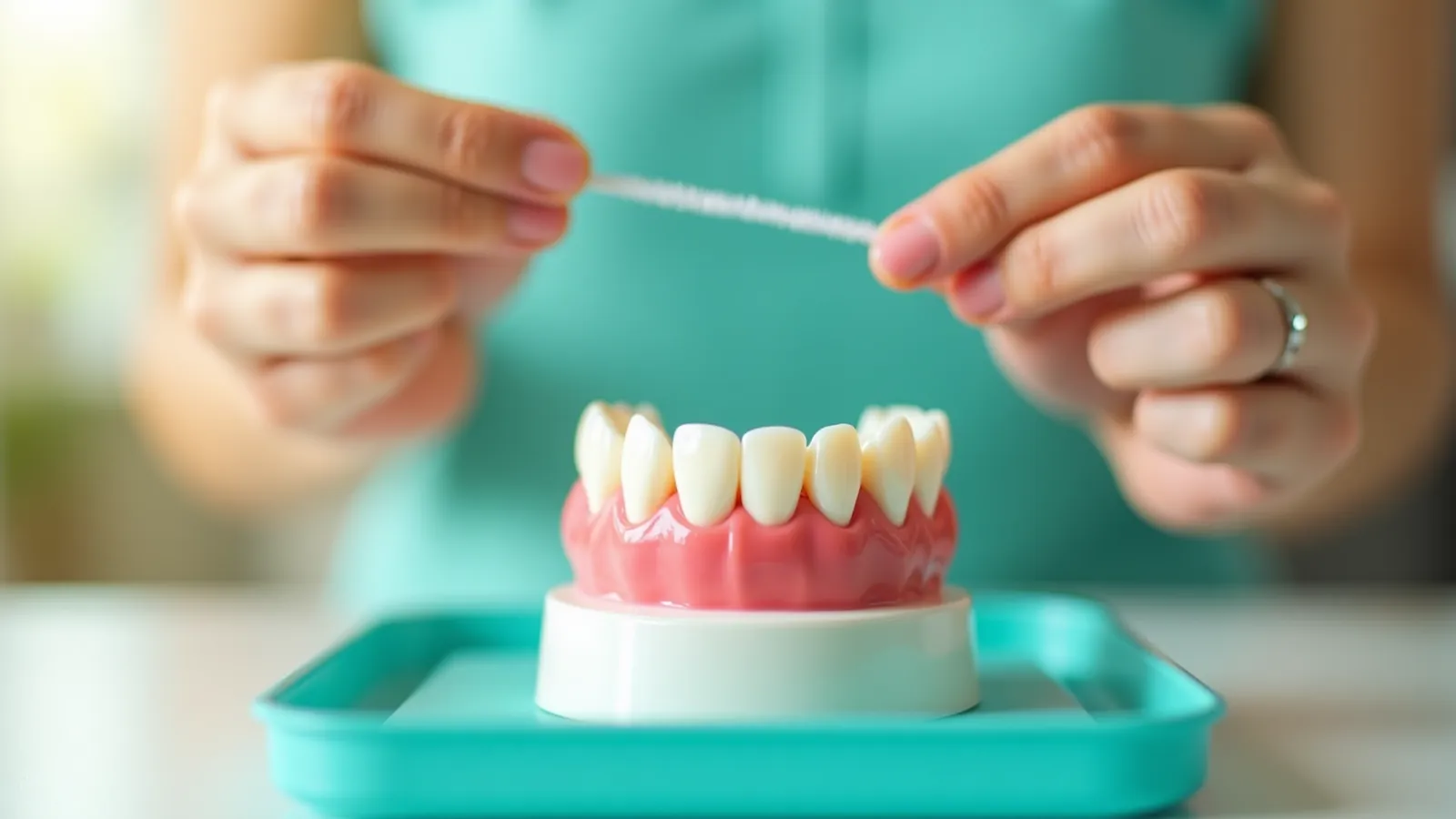
The ADA advises cleaning between your teeth once a day. With floss, curve it into a C shape against each tooth and slide it gently up and down (NHS); don't snap it into the gum. The most inflamed spots may bleed at first. Keep going, gently.
Why it matters: a Cochrane review found that floss or interdental brushes used with brushing may reduce gingivitis compared with brushing alone, though the certainty of that evidence is low.
Move on when: You clean every gap once a day without forcing the floss.
Every night: keep a simple log
Each night, note how many spots bled and whether it was less than before, using the log below. It stops you guessing and gives your dentist useful detail.
Move on when: You have a line in the log for each night.
This week: book a cleaning if you can
Plaque that has hardened into tartar needs professional removal (CDC). The MedlinePlus figure of 1 to 2 weeks for bleeding to lessen assumes a professional cleaning plus good home care, so home care alone may take longer, or may not be enough if tartar is present.
Move on when: The visit is booked, or you know a lower-cost clinic to call.
After your cleaning: decide
If it has not improved, or it is getting worse, see a dentist; MedlinePlus expects bleeding to lessen within 1 or 2 weeks after a professional cleaning with good home care. Do not wait for pain: the CDC notes gum disease can become serious before a person notices symptoms.
Move on when: Bleeding is clearly less, or you have booked the dentist.
| Day | Spots that bled | Less than last time? | Sore or swollen? | Notes |
|---|---|---|---|---|
| 1 (example) | 8 | First night | No | Floss, lower front teeth |
| Your day |
Two habits make the plan easier. Avoid mouthwash straight after brushing, because it washes off the fluoride; use it at a different time, such as after lunch (NHS). If you smoke, MedlinePlus notes that tobacco can mask problems that cause bleeding.
For technique help, see how to floss properly and how to use interdental brushes.
Suppose you see bleeding at about eight spots on the first night of flossing, mostly between the lower front teeth. You switch to a soft brush, brush for two full minutes twice a day and floss once each evening. By day 5 the log shows five spots, by day 10 two, and the gums look less puffy. If the log had not improved after a cleaning, or one area had become sore or swollen, that would be the point to see a dentist.
Troubleshooting: when the bleeding does not settle
- If your gums bleed only when you floss
- Check your force first. Guide the floss with a gentle rubbing motion and never snap it into the gum. If a gap is wide, the NHS suggests an interdental brush that fits snugly instead of floss.
- If one spot keeps bleeding while the rest improve
- Look for a reason at that spot: food that keeps catching, a rough filling edge, a crowded tooth or a denture rubbing. These need a dentist to fix. MedlinePlus says to see your dentist if dentures or other dental appliances do not fit well or cause sore spots on your gums.
- If your gums feel sore after brushing
- You may be pressing too hard or using a hard brush. MedlinePlus lists brushing too hard as a cause of bleeding. Use a soft brush, short strokes and a light grip.
- If you take a blood thinner or another medicine
- Keep taking it as prescribed. MedlinePlus says never to change your medicines without first talking to your provider. Tell your dentist and your prescriber about the bleeding; they can judge whether the medicine plays a part.
- If you are pregnant
- Hormonal changes in pregnancy can make gums bleed more easily (MedlinePlus). Keep up the routine and tell your dentist you are pregnant at your visit.
- If you have been buying rinses or supplements that did not help
- None of the sources here puts a rinse or a supplement ahead of removing plaque. Before you spend more, read what the evidence says about dental supplements.
Watch for
Bleeding that is severe, long-term or comes with other unexplained symptoms needs a doctor as well as a dentist. MedlinePlus lists bleeding disorders, leukemia and vitamin deficiencies among the less common causes.
What is worth buying for bleeding gums
You do not need anything expensive. A soft brush, a fluoride toothpaste and one between-the-teeth tool you will use every day cover it. The ADA Seal means a product has met ADA criteria for safety and effectiveness (ADA).
| Item | What to look for | Good to know |
|---|---|---|
| Toothbrush | Soft bristles and a head small enough to reach every tooth (ADA); manual or electric | The NHS says both types work equally well if you clean every surface |
| Toothpaste | Fluoride and the ADA Seal; the NHS advises adults to use at least 1,350 ppm fluoride | Check the packaging for the fluoride amount (NHS) |
| Floss | Any floss you will use daily, with the C-shape technique (NHS) | Cochrane: floss plus brushing may reduce gingivitis (low-certainty evidence) |
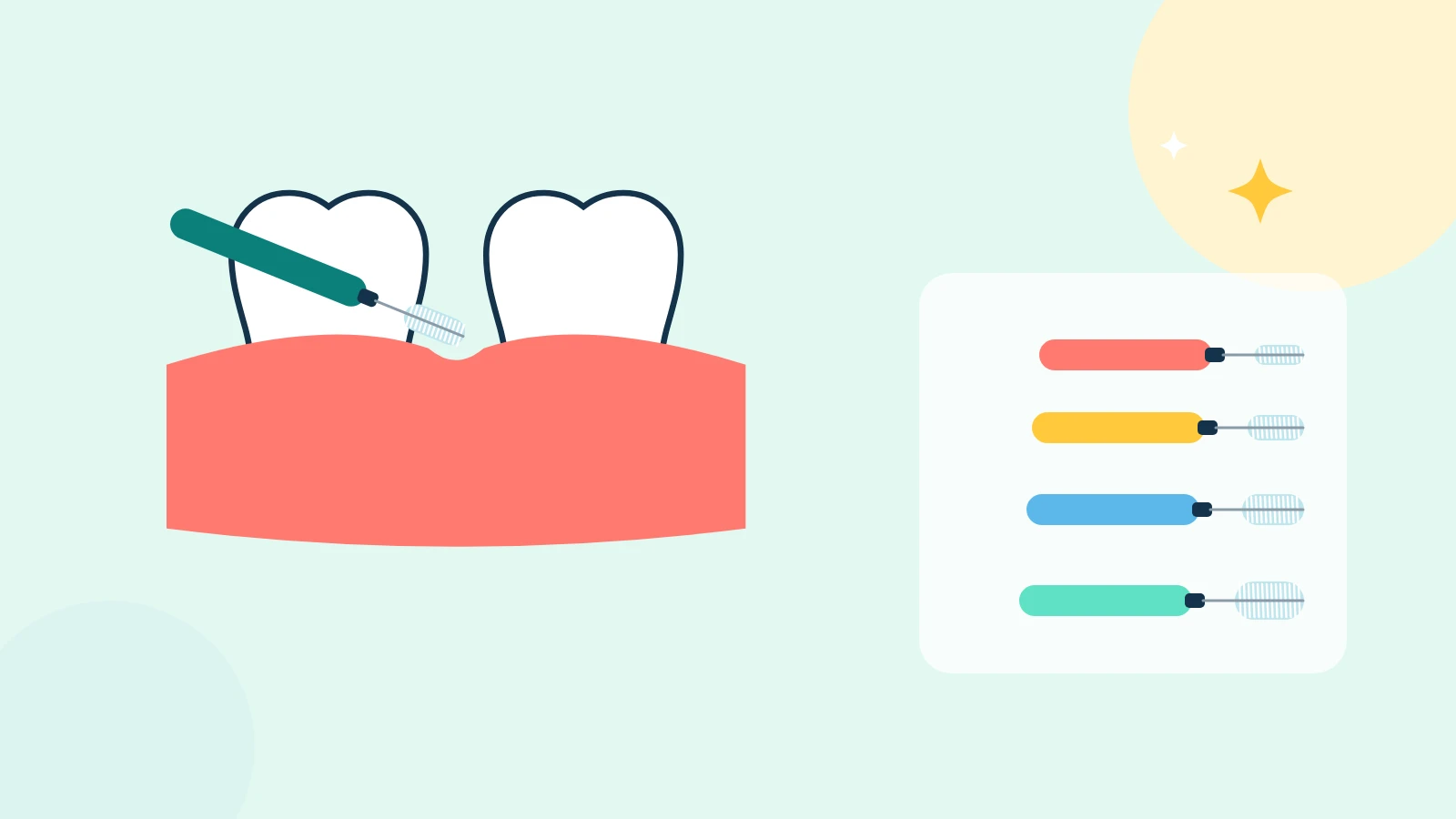
| Interdental brushes | A size that fits snugly in each gap (NHS) | Cochrane: may beat floss for gingivitis at one and three months |
| Water flosser | An optional add-on for between the teeth; it does not replace brushing (MedlinePlus says you still must brush and floss) | Cochrane: may reduce gingivitis in the short term; no evidence of benefit in the medium term |
To shop, try Amazon searches for soft-bristled toothbrushes (Amazon, affiliate link) opens in a new tab, ADA-accepted fluoride toothpaste (Amazon, affiliate link) opens in a new tab and interdental brushes in assorted sizes (Amazon, affiliate link) opens in a new tab.
When to see a dentist about bleeding gums
See a dentist promptly if
- Your gums keep bleeding, especially if you have not had a cleaning and exam in the last 6 months, or bleeding has not lessened 1 or 2 weeks after a professional cleaning (MedlinePlus).
- You have pain: intense toothache or pain in your gums (the NHS says an abscess needs urgent dental treatment), or painful chewing (CDC).
- Swelling of your gums, face or jaw: ask for an urgent dentist appointment (NHS).
- An adult tooth feels loose; the CDC lists loose teeth among the signs of gum disease.
- A sore, lump, or red or white patch in your mouth lasts more than two weeks (NIDCR says to see a dentist or doctor).
- Bleeding is severe or long-lasting, or comes with other unexplained symptoms (MedlinePlus).
- Emergency: facial or jaw swelling with a fever, or trouble breathing, speaking or swallowing. The NHS advises an urgent dentist appointment for a swollen face or jaw with a high temperature, and emergency care now (call 911 or go to the emergency room) for trouble breathing, speaking or swallowing or a lot of swelling in your mouth.
Who to see. Start with a dentist: only an exam (and sometimes an X-ray) can tell gum disease, a cavity, a cracked tooth or an infection apart. No regular dentist, or worried about cost? The National Institute of Dental and Craniofacial Research lists lower-cost options, including dental schools and community clinics, and you can search for a federally funded health center near you on findahealthcenter.hrsa.gov.
Frequently asked questions
Is it normal for gums to bleed when you start flossing?
Inflamed gums bleed easily: MedlinePlus lists bleeding when brushing or flossing as a sign of gingivitis, and plaque at the gumline as the main cause. MedlinePlus says bleeding and tenderness should lessen within 1 or 2 weeks after a professional cleaning combined with good home care. If it has not improved after about two weeks, or flossing is painful, talk with a dentist.
What deficiency causes bleeding gums?
MedlinePlus lists vitamin C deficiency (scurvy) and vitamin K deficiency among the causes of bleeding gums. Plaque at the gumline is the main cause, according to the same page. Do not start supplements to treat bleeding on your own: MedlinePlus advises vitamin supplements if you have been diagnosed with a deficiency, so ask a doctor for testing first.
What are the early signs of gum disease?
Gums that bleed easily, red or swollen gums, tenderness and bad breath are typical early signs (CDC, MedlinePlus). Gums pulling away from teeth, loose or sensitive teeth and pain when chewing suggest the problem may have gone further. Because gum disease can be serious before you notice symptoms, the CDC suggests a dental checkup at least once a year.
Can bleeding gums go away on their own?
Bleeding from plaque usually needs action to settle: better daily cleaning and, often, a professional cleaning. The CDC says gingivitis is largely preventable and treatable with routine oral hygiene and professional cleanings. Waiting without changing anything lets plaque harden into tartar, which only a professional can remove.
Sources
- Bleeding gums, MedlinePlus Medical Encyclopedia, U.S. National Library of Medicine (accessed October 28, 2026).
- Gingivitis, MedlinePlus Medical Encyclopedia, U.S. National Library of Medicine (accessed October 28, 2026).
- About Periodontal (Gum) Disease, Centers for Disease Control and Prevention (accessed October 28, 2026).
- Brushing Your Teeth, MouthHealthy, American Dental Association (accessed October 28, 2026).
- How to keep your teeth clean, NHS (accessed October 28, 2026).
- Home use of devices for cleaning between the teeth (in addition to toothbrushing) to prevent and control gum diseases and tooth decay, Cochrane (accessed October 28, 2026).
- Dental abscess, NHS (accessed October 28, 2026).
- Oral Cancer, National Institute of Dental and Craniofacial Research (accessed October 28, 2026).

Gums bothering you? Start here
Bleeding, puffy or tender gums, in the order that helps most: what is happening, the daily routine and when to see a dentist.